Biochar production technology
Biochar production system introduction
Biochar can be produced using several thermal conversion technologies, depending on the feedstock type, desired biochar characteristics, and production scale. Below is an overview of the main biochar production technologies, their principles, and typical outputs.
Pyrolysis (Most Common Method)
Definition: Thermal decomposition of biomass in the absence or near-absence of oxygen.
Temperature: 300–700 °C
Main products: Biochar, bio-oil, and syngas (ratios depend on conditions).
Temperature: 300–700 °C
Main products: Biochar, bio-oil, and syngas (ratios depend on conditions).
| Type | Conditions | Key Features | Biochar Yield |
|---|---|---|---|
| Slow Pyrolysis | 350–550 °C, long residence time (minutes–hours) | Maximizes biochar yield; used in most biochar plants | 30–50% |
| Fast Pyrolysis | 450–650 °C, short residence time (seconds) | Maximizes bio-oil; less biochar | 10–20% |
| Intermediate Pyrolysis | 400–600 °C, moderate residence time | Balanced production of char, oil, and gas | 20–35% |
| Flash Pyrolysis | >700 °C, very short time (milliseconds) | Focus on bio-oil production | <10% |
- Fixed-bed reactors
- Rotary kilns
- Fluidized-bed reactors
- Auger (screw-type) reactors
| Technology | Temperature (°C) | Atmosphere | Feedstock Moisture | Main Products | Biochar Yield | Typical Use |
|---|---|---|---|---|---|---|
| Slow Pyrolysis | 350–550 | Anaerobic | Dry | Char, oil, gas | 30–50% | Biochar production |
| Fast Pyrolysis | 450–650 | Anaerobic | Dry | Bio-oil | 10–20% | Bio-oil, R&D |
| Gasification | 700–1000 | Partial oxidation | Dry | Syngas | 5–10% | Energy |
| HTC | 180–250 | Subcritical water | Wet | Hydrochar | 50–70% | Wet biomass |
| Torrefaction | 200–300 | Anaerobic | Dry | Solid bio-coal | 70–80% | Fuel |
| Microwave Pyrolysis | 300–700 | Anaerobic | Dry | Char, gas | 20–40% | Lab-scale, specialty char |
| Traditional Kilns | 300–500 | Limited air | Dry | Char | 25–50% | Small-scale, low-cost |
In CPMTP the technology we adapt, and supply is slow pyrolysis – auger reactor. The unique feature of our technology is that the pyrolysis gas is combusted in the reactor, so the system does not produce bio-oil and wood vinegar. The high temperature flue gas is heat exchanged and applied to meet customers’ specific needs. Please refer to the A Few Design Examples.
CPMTP Pyrolysis technology
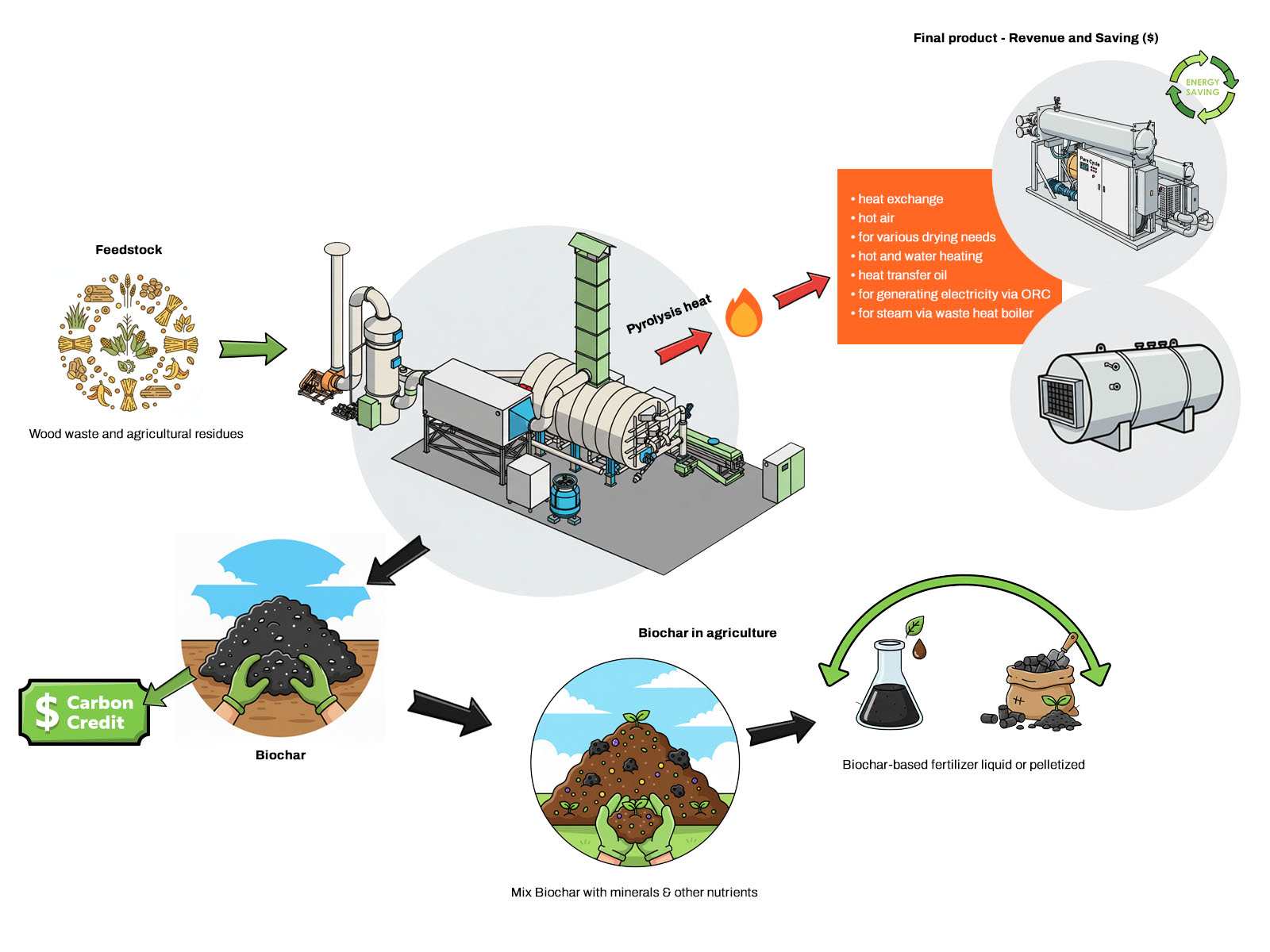
- Expertise in converting thermal energy into practical use, aiming to supply fully integrated system solutions.
- Customized design to meet customers’ specific needs for:
- The use of Pyrolysis heat to be converted to
- ✅ Hot air, or
- ✅ Hot water, or
- ✅ Hot oil, or
- ✅ Steam, or
- ✅ Electricity
- Adding value to biochar, – producing biochar-based fertilizers (BBF)
- ✅ Ultra-fine powdered biochar & minerals
- ✅ Liquid BBF or liquid biochar
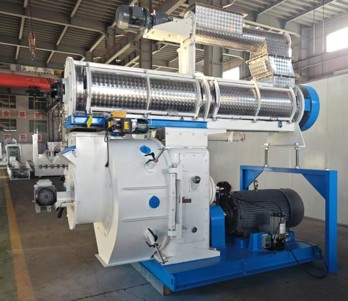
- ✅ Pelletized / granulated BBF
- The use of Pyrolysis heat to be converted to
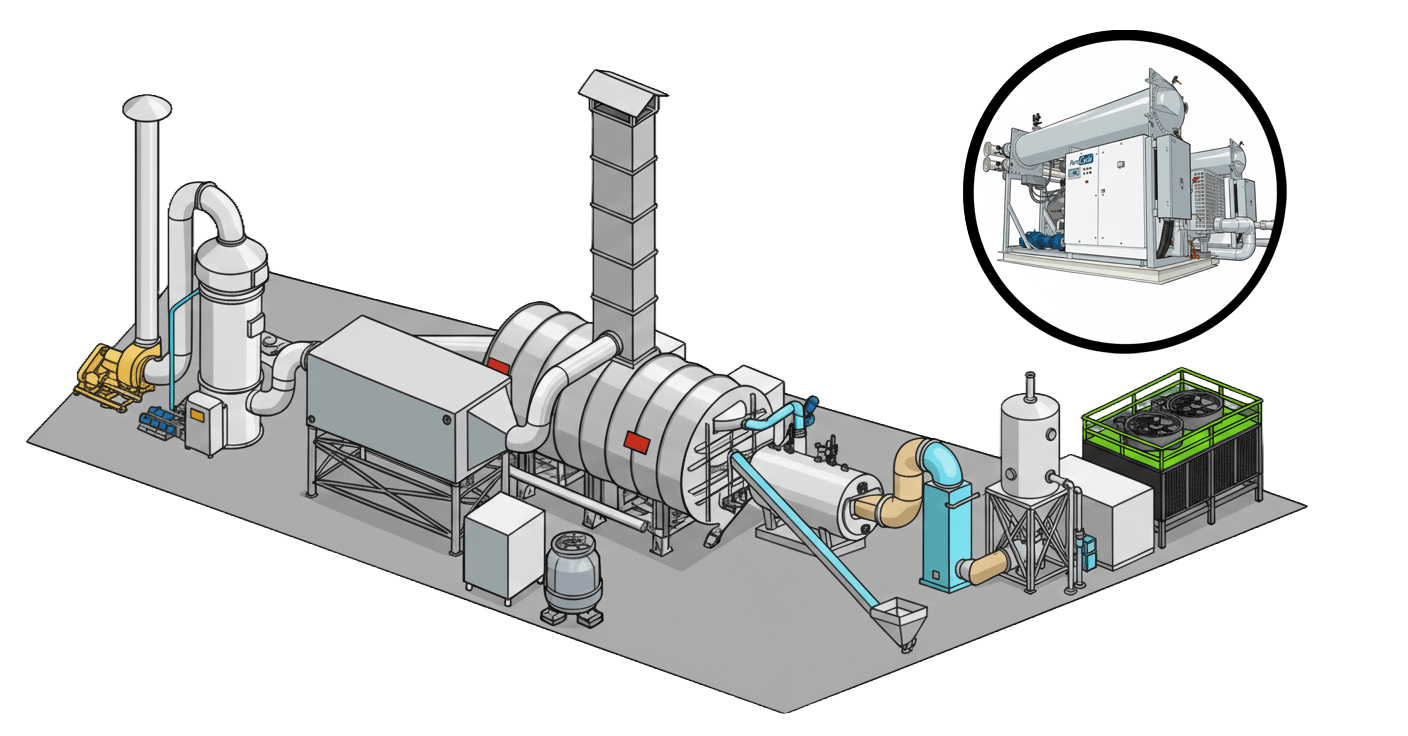
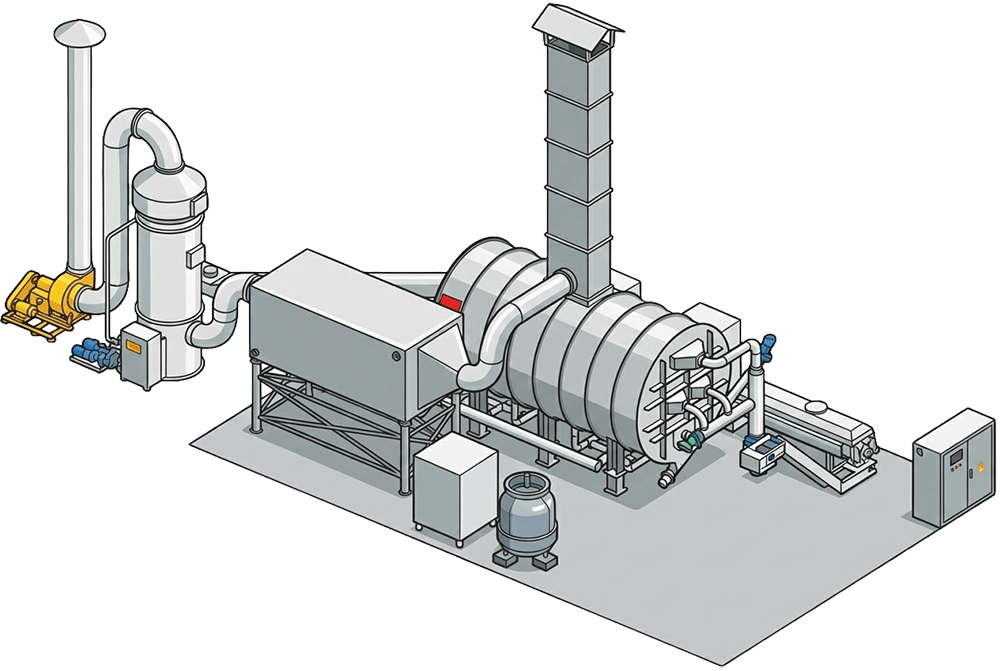
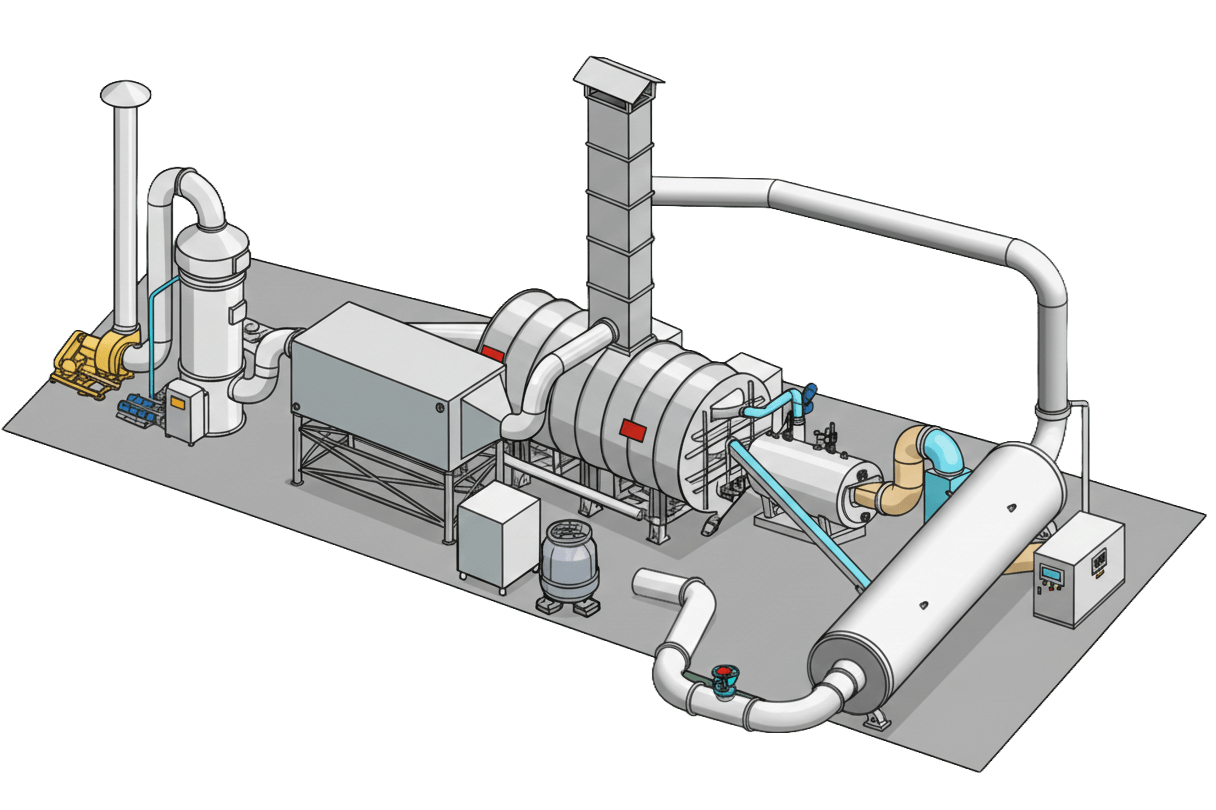
Pyrolysis heat is to generate steam through a waste heat boiler
Data Summary
(Example assumptions & estimates)
Assuming work 7,200 hours / year
| Total coffee husk input (12% MC) | 6,480T |
| Total coffee husk biochar output (0% MC) | 1,880T |
| Approx. selling of steam to garment factory | 8,000T |
| Rated power | 70kw |
| Actual power consumption | 50kwh |
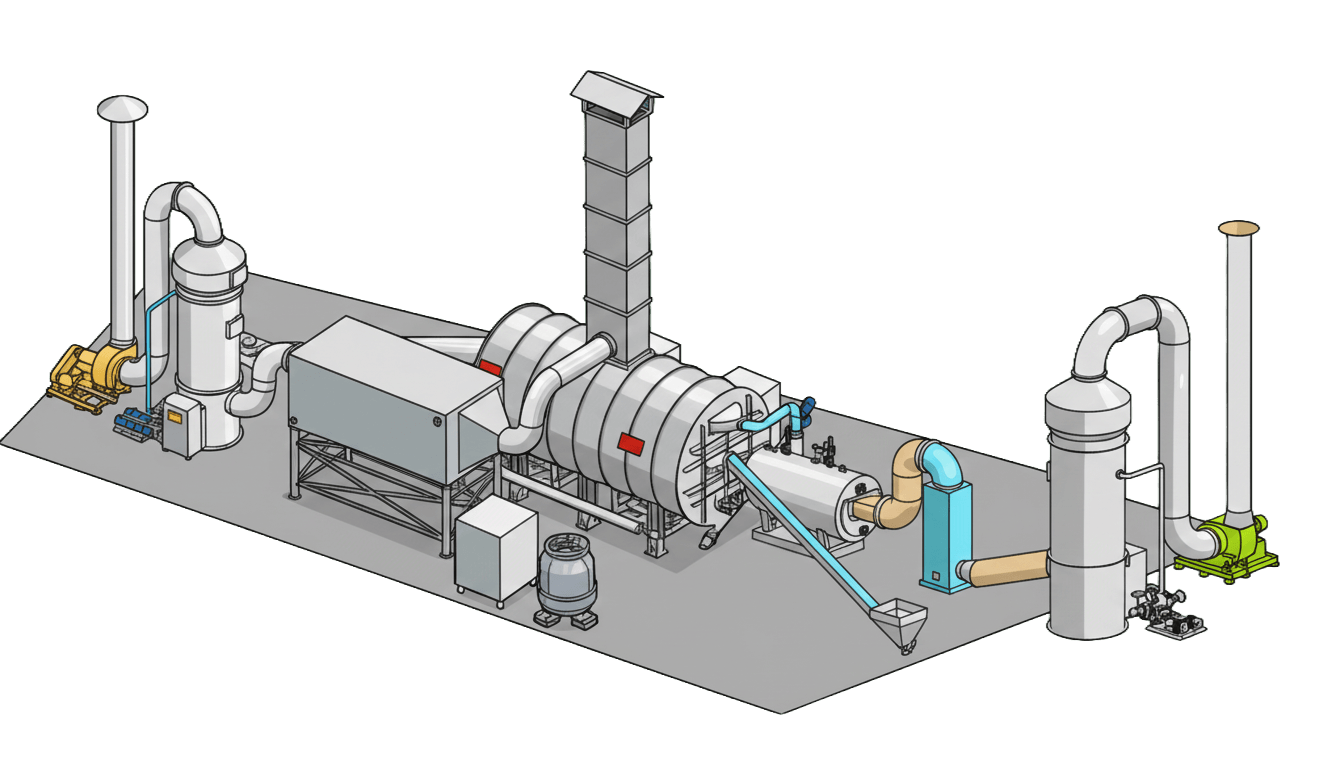
Pyrolysis heat is heat exchanged to hot air used for drying in the processing season, or generate electricity in the non-processing season, through an ORC system (Organic Rankine Cycle)
Data Summary
(Example assumptions & estimates)
Assuming work 7,200 hours / year
| Total CGT pellets input (8% MC) | 7,200T |
| Total CGT biochar output (0% MC) | 2,000 - 3,000T |
| Approximate electricity generation | 648 MWh |
| Rated power | 83kw |
| Actual power consumption | 65kwh |
Making waste wood biochar while drying wet wood feedstock (hot air):
- Feedstock initial moisture content 15% - 50%
- Hot air temperature: 150 - 220°C (heat-exchanged from pyrolysis heat)
- Duration of drying: 5 - 30 minutes
- Target moisture content after drying: 12%
Making biochar while drying Nuts in Shell (hot water or hot air):
- Temperature: 40°C to 45°C
- Duration for drying: 3–10 days
- Target moisture content: 10% or slightly lower
- Avoid temperatures above 50°C, as high heat can affect the product quality.
- Can supply 45M³ hot water at 60ºC for drying).
- Longer useful life is built into the design, material selection, and the manufacturing of this production system.
- The refractory materials are used in the inner layer of the reactor chamber, high temperature tolerance up to 1,500°C, that gives longer durability of the equipment.
- The material for the reactor trough auger where the pyrolysis takes place using 310S stainless steel, which is specifically for applications at temperatures up to 1,150°C in continuous service (the pyrolysis area usually 500-700°C).
- The reactor has 5 layers, for ultimately effective retaining of the heat.
- Stainless steel 304 or 316L are used in the majority parts of the material handling equipment, pipes and connecting parts, etc.
- System Automation Control: with stable moisture content and particle size of the raw biomass material input, the pyrolysis operation can be developed into highly automated with sound efficiency.
- Biochar cooling & humidifying system for safe-handle of hot biochar. The wet scrubber for emission control.
Equipment reliability and durability
- Need to operate 7000-8000 hours per year
- Continuously operating in high temperature 700-950ºC
- The harsh operating condition and long hours continuous running impose highly demanding requirements on the design & material used
Through-put capacity & carbon content
- Customers & investors all want good through-put and higher carbon content, for carbon credits and biochar product
Meeting regulatory & standard requirements
- Tough biochar industry’s standards on the biochar and emissions (e.g. PAHs, CH4)
- Local authorities’ emission standards
- The considerations of users’ experience is built into the design & manufacture of the equipment
- The consideration of equipment’s reliability & durability are built into the detailed design and material selection process
- The consideration of the optimization, which has the effect to enhance equipment handling capacity, and to minimize emissions, are also built into the detailed design.
Biochar value-adding equipment
- Mixer for Mixing Materials
- Grinding Machine and Emulsifier / Homogenizer
- Various Forms of Biochar-based Fertilizers
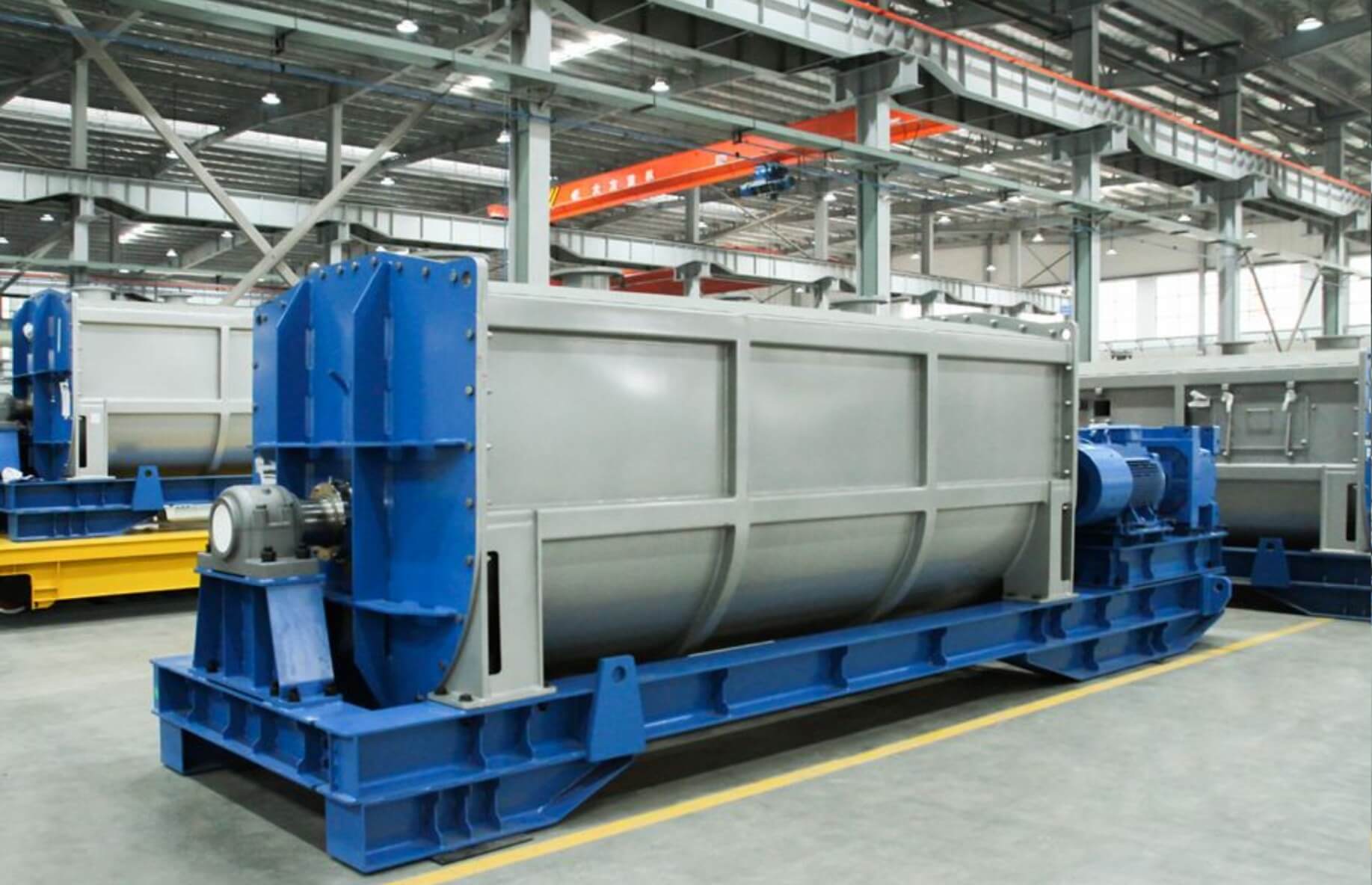
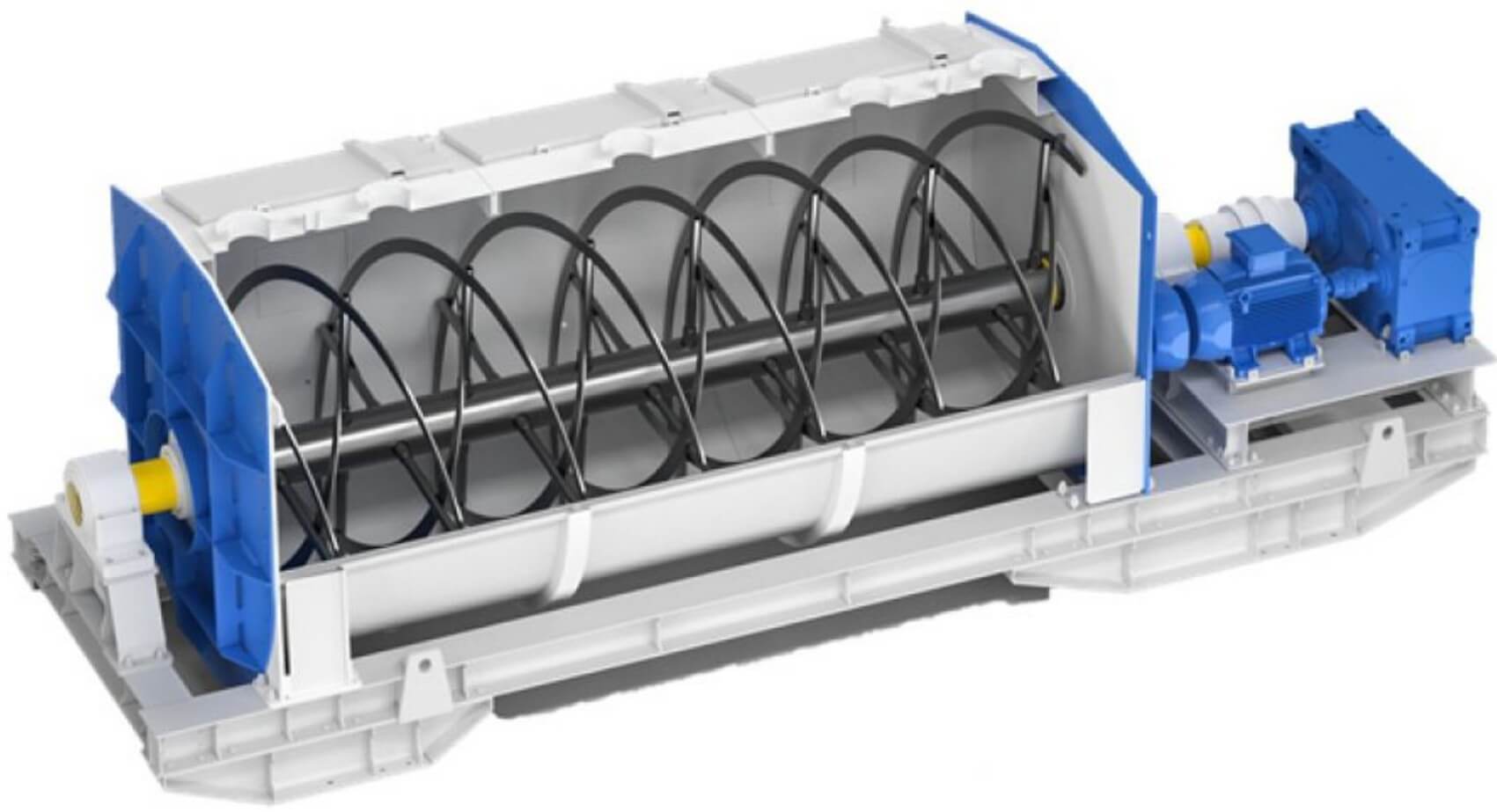
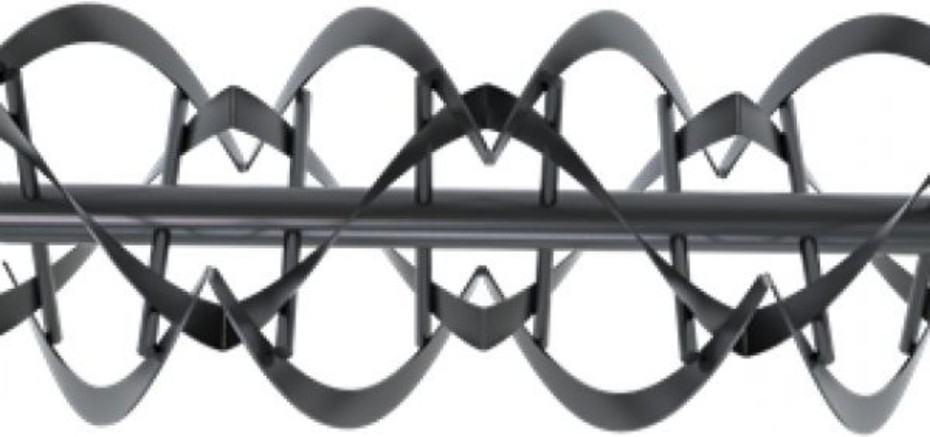
Horizontal ribbon mixer is usually used for mixing powders with powders, powders with liquids, also good in mixing paste-like, viscous or heavy materials.
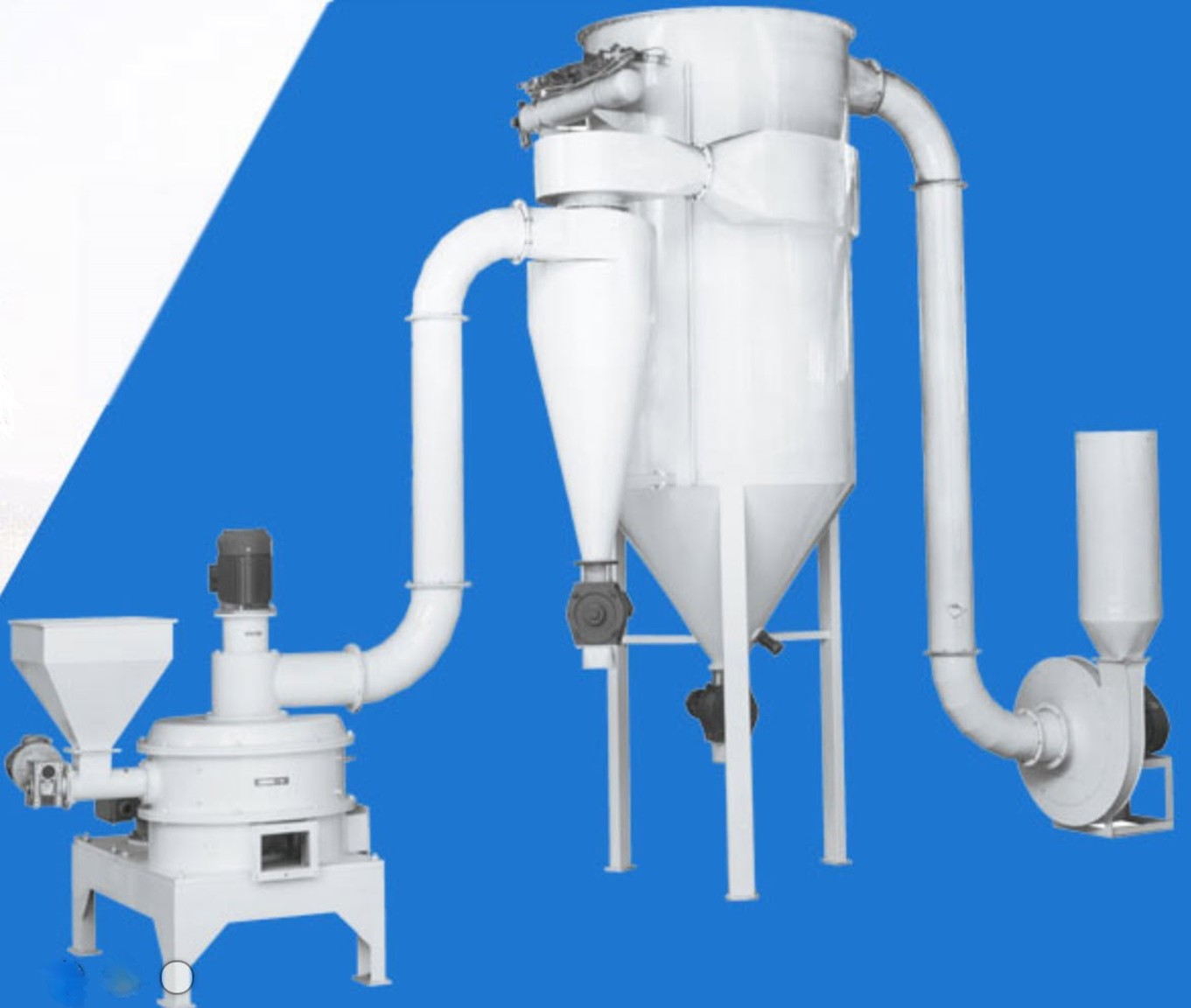
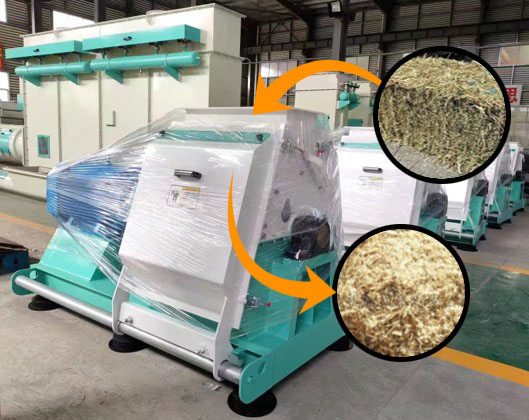
The grinding machine is continuous process to produce uniform particle size. The powder size can be controlled & ranged from 425 Micron to ultrafine 4.5 Micron or 4,500 Nm.
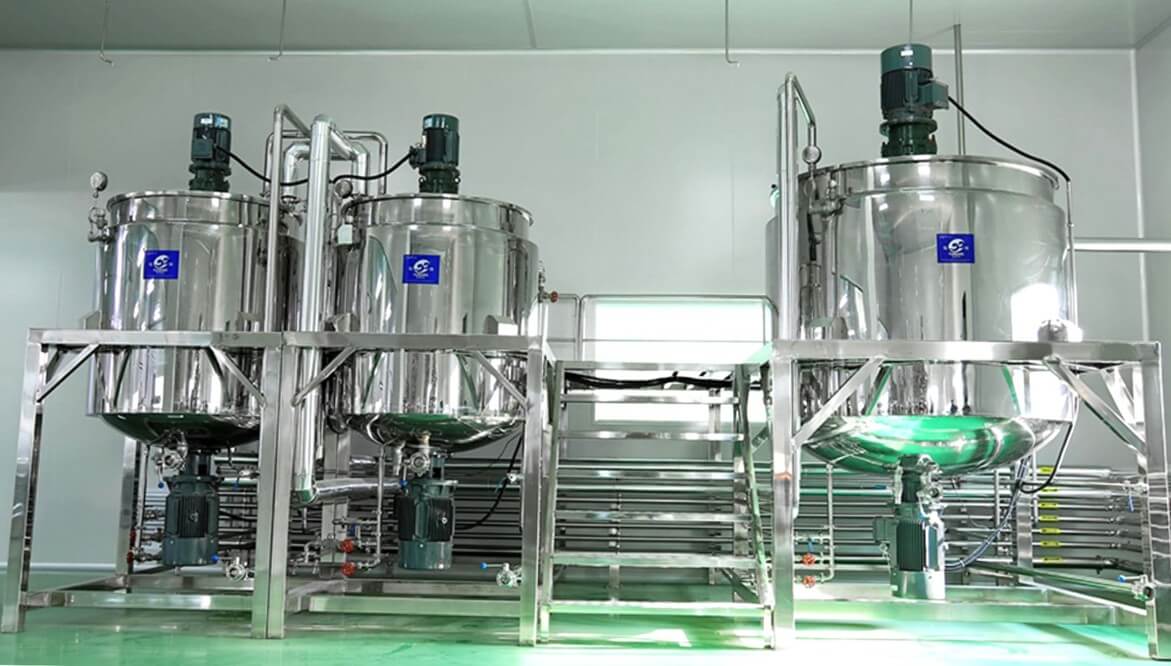
An example of the look of a liquid fertilizer production station, it can be customized design.
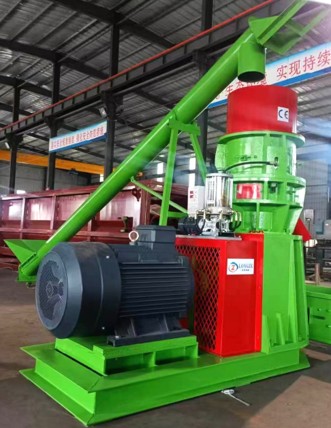
Learn more about Biochar-based fertilizers in agriculture.